
Pet Anti-Inflammatory Medications in Newark, NJ
Veterinary anti-inflammatory medications for dogs and cats in Newark and nearby North Jersey communities.
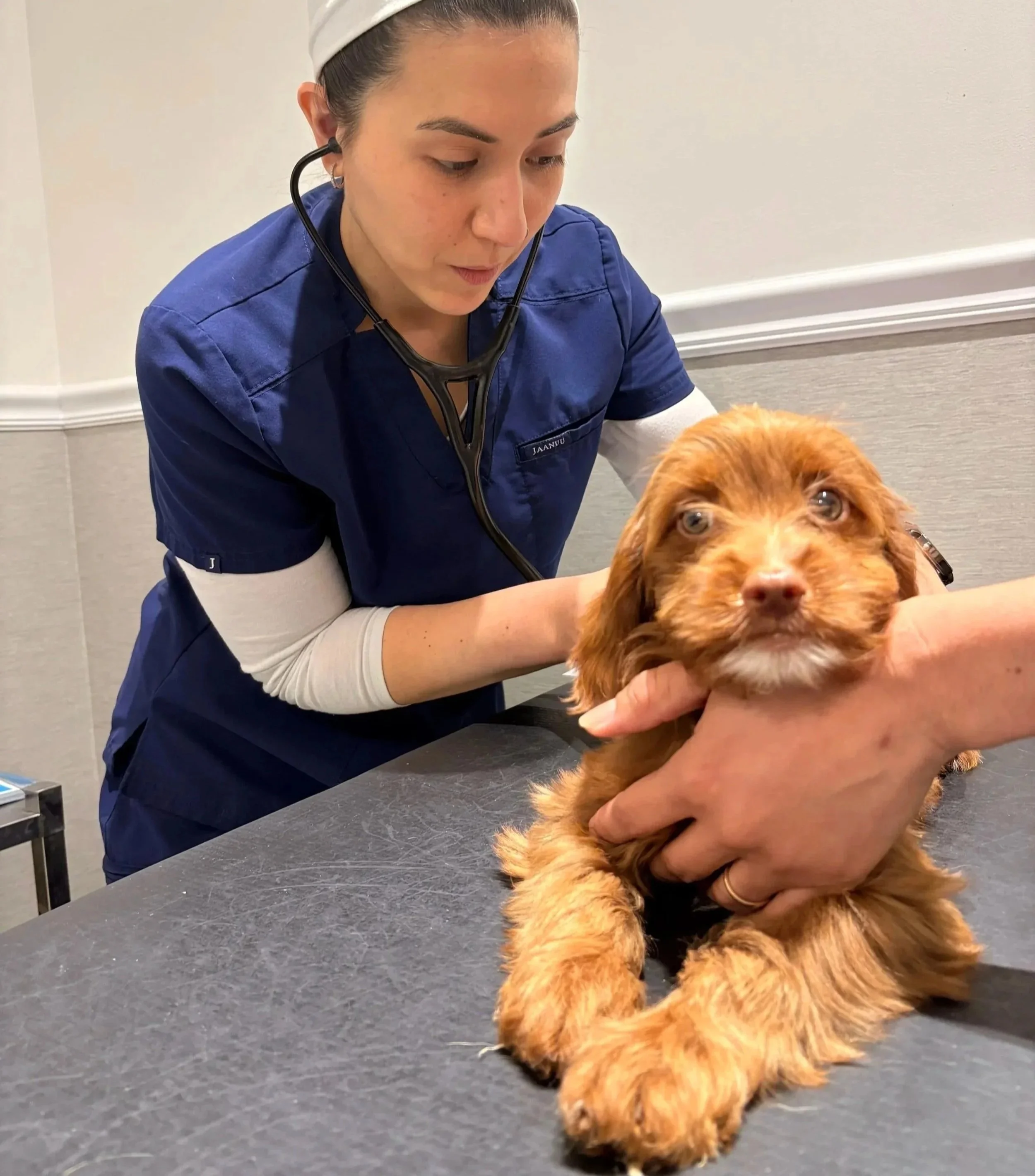
Is your dog limping after a walk, your cat hiding more than usual, or your pet acting sore after an injury, dental problem, skin flare, or procedure? Anti-inflammatory medications can be helpful for some pets, but they should never be guessed from a human medicine cabinet or an old prescription bottle.
Not sure whether your pet needs anti-inflammatory medication, pain control, a sick pet visit, emergency care, or a different treatment entirely? Contact our Newark veterinary team before giving aspirin, ibuprofen, naproxen, acetaminophen, leftover pet medication, or another animal's prescription. Our animal hospital is on McCarter Highway near the Passaic River, convenient for pet owners from the Ironbound, Downtown Newark, East Ward, University Heights, Harrison, and Kearny.
At the Veterinarian Pet Alliance, we provide pet anti-inflammatory medications in Newark, NJ, when our veterinarians determine that medication is appropriate for your dog or cat. Our team will evaluate your pet's symptoms, pain level, health history, current medications, age, weight, and any needed pet bloodwork or lab testing before recommending a plan.
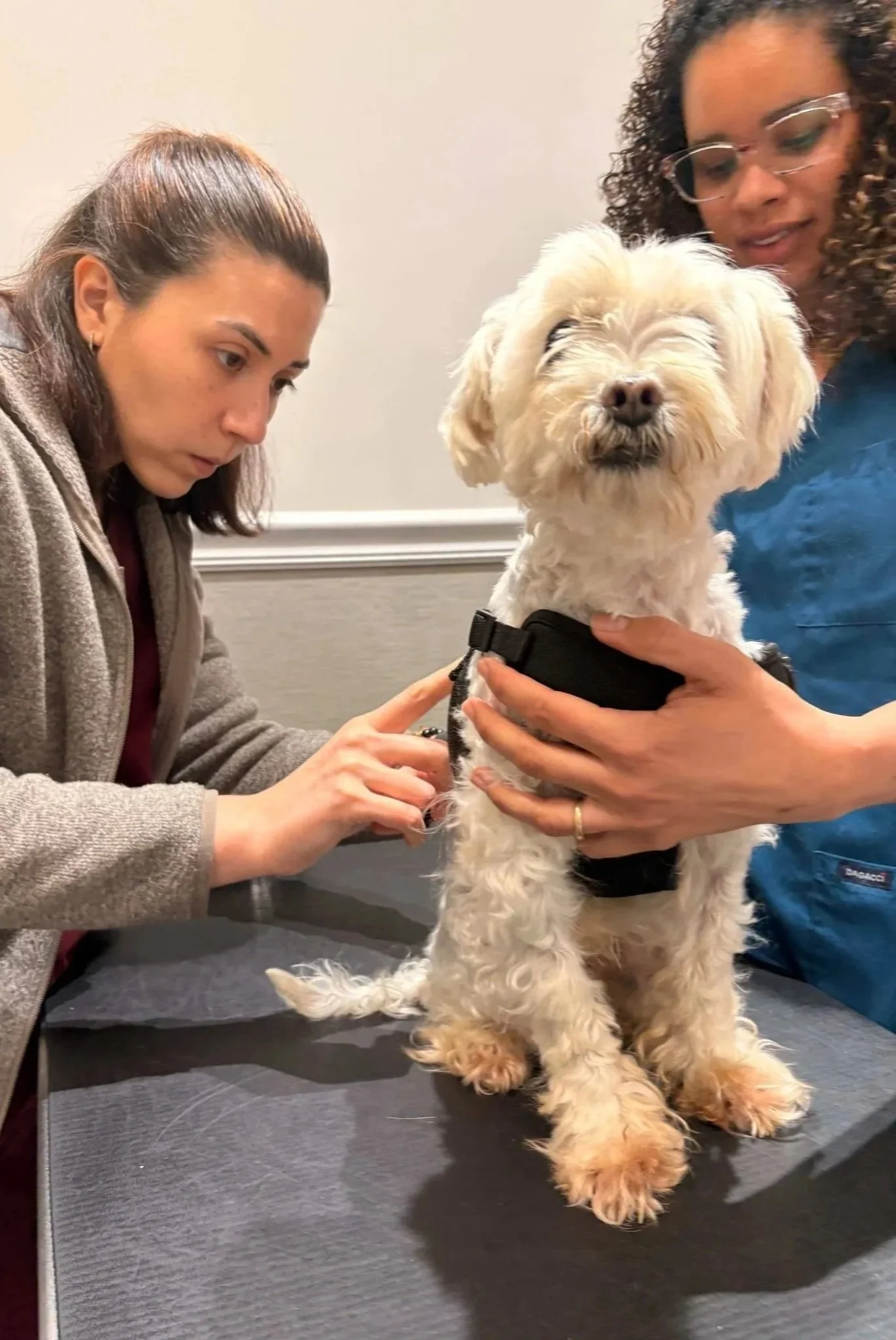
Anti-Inflammatory Medication for Dogs and Cats in Newark & Ironbound, NJ
Are you hoping to help your pet feel better quickly? That makes sense. But inflammation is a sign, not a complete diagnosis. A limping dog may have a sprain, torn ligament, paw injury, nail problem, joint disease, infection, or something more serious. A cat who seems painful may have dental disease, urinary trouble, trauma, arthritis, abdominal discomfort, or another condition that needs a different plan.
Our veterinarians will decide whether pet anti-inflammatory medications belong in your pet's care plan or whether another treatment is safer. That may include rest, wound care, dental care, pet allergy and skin care, surgery-related follow-up care, diagnostic imaging, pet bloodwork, lab testing, or referral when a higher level of care is needed.
If you live in Newark, Forest Hill, the North Ward, Central Ward, South Ward, West Ward, Clinton Hill, Springfield/Belmont, Vailsburg, Weequahic, East Orange, Belleville, Bloomfield, Harrison, or Kearny, our team can help you sort out what your pet's pain or inflammation may mean instead of trying medication at home without guidance.
Anti-inflammatory medication may be used to help reduce pain and inflammation when a pet has the right diagnosis and can take the medication safely. These medications are often discussed for orthopedic pain, post-procedure discomfort, arthritis-like mobility changes, certain injuries, soft tissue swelling, dental discomfort, skin inflammation, or other conditions our veterinarians identify during an exam.
When Your Pet May Need Anti-Inflammatory Medication in Newark & Ironbound, NJ
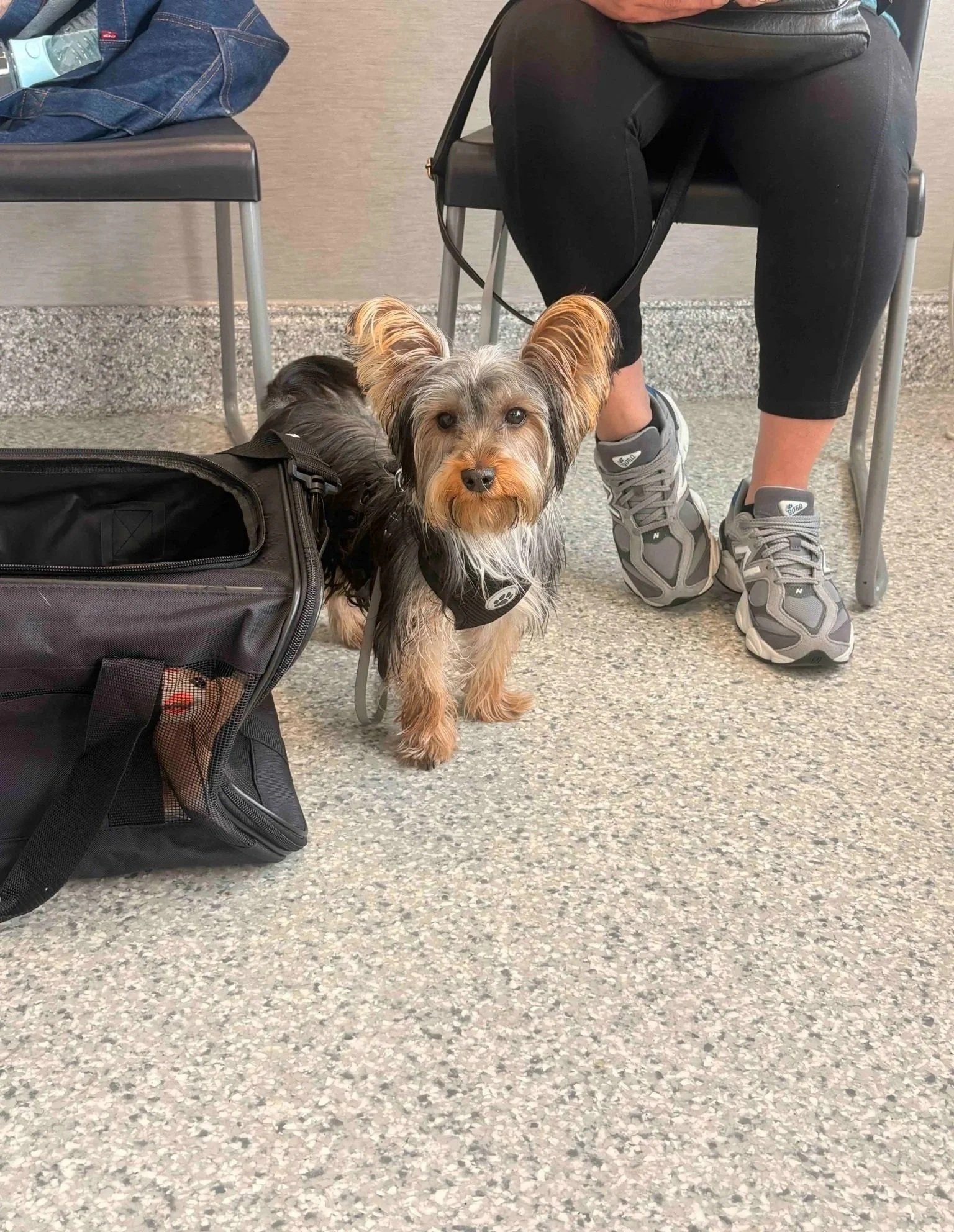
How do I know if my pet's inflammation needs medication? The answer depends on what is causing the pain, swelling, stiffness, redness, or discomfort. Anti-inflammatory medication may help in some cases, but the safest plan starts with an exam and a clear reason for the medication.
Our veterinarians may discuss anti-inflammatory medication when a dog or cat has concerns such as:
Limping, stiffness, soreness, or trouble rising
Joint pain, arthritis-like mobility changes, or orthopedic discomfort
Pain or inflammation after veterinary surgery and soft tissue surgery
Discomfort after spay and neuter surgery, dental care, or mass removal and wound repair
Soft tissue swelling, sprains, strains, or minor injuries after evaluation
Skin, ear, or allergy-related inflammation that needs veterinary treatment
Oral pain, jaw discomfort, or dental inflammation
Painful inflammation connected to another diagnosed condition
This list does not mean every pet with these signs should receive anti-inflammatory medication. Some pets need antibiotics, other pain medication, imaging, bandaging, wound care, dental treatment, parasite prevention, allergy management, or emergency care instead. If your pet cannot walk, is crying in pain, has trouble breathing, collapses, cannot urinate, has a swollen abdomen, has severe bleeding, or declines quickly, seek urgent veterinary care.
Everyday Newark routines can reveal a problem: a dog comes home limping after Branch Brook Park, a cat jumps down awkwardly in an Ironbound apartment, or a pet near Riverfront Park, Independence Park, Weequahic Park, Military Park, Lincoln Park, Ferry Street, Broad Street, Market Street, or Raymond Boulevard starts moving differently. When pain or inflammation shows up, do not cover it with unapproved medication. Let our veterinarians help you identify the next step.
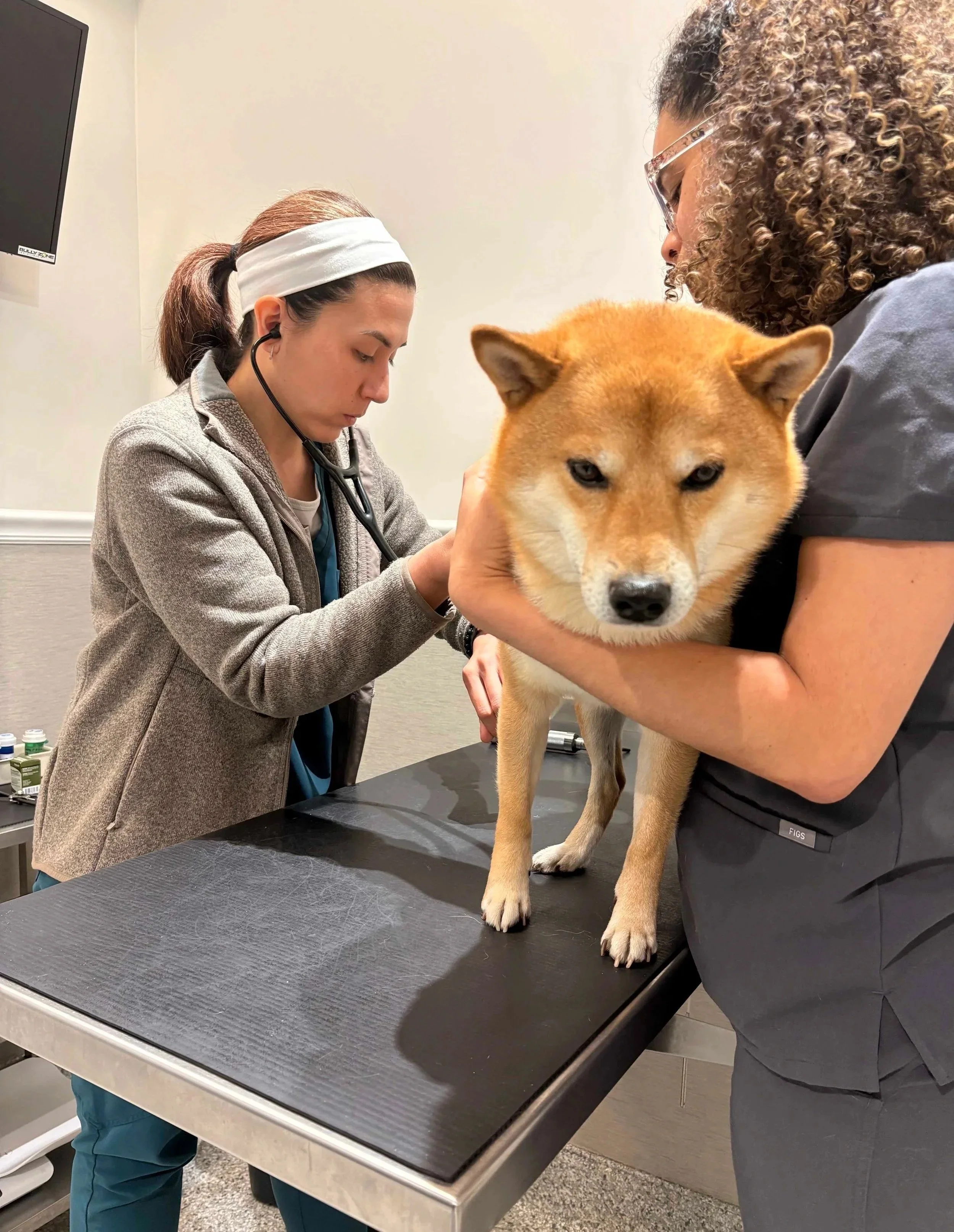
Dog Anti-Inflammatory Medications in Newark, NJ
Does your dog limp after exercise, struggle on stairs, hesitate to jump into the car, lick a sore area, or seem stiff after resting? Dog anti-inflammatory medications may be recommended when our veterinarians find a condition where reducing inflammation is appropriate and your dog can take the medication safely.
Dogs may need an anti-inflammatory medication plan for joint discomfort, soft tissue injury, post-surgical inflammation, dental pain, skin inflammation, ear-related discomfort, or other painful conditions. The medication choice depends on your dog's diagnosis, size, age, hydration, kidney and liver health, stomach history, current prescriptions, supplements, and whether your dog has taken similar medication before.
If your dog is older, takes other medications, has vomiting or diarrhea, drinks or urinates more than usual, has known kidney or liver concerns, or needs medication for more than a very short course, our veterinarians may recommend pet bloodwork or lab testing before or during treatment. Monitoring helps us reduce avoidable risk and adjust the plan if your dog is not responding as expected.
Please do not give your dog aspirin, ibuprofen, naproxen, another dog's anti-inflammatory medication, or a leftover prescription unless our veterinarians specifically tell you to. Dogs are not small people, and a dose that seems ordinary for a person can be unsafe for a dog.
Cat Anti-Inflammatory Medications in Newark, NJ
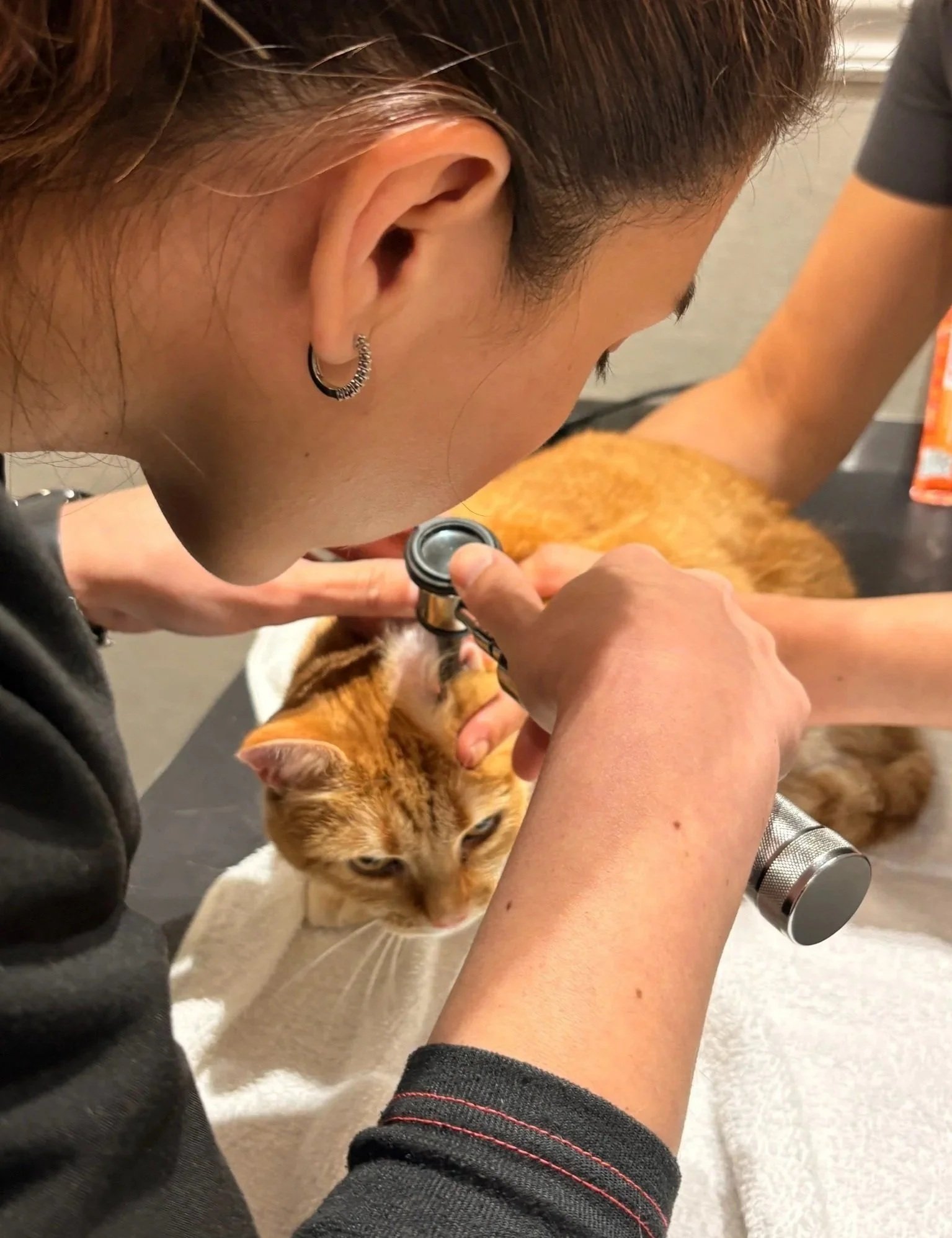
Is your cat hiding, moving less, resisting touch, limping, avoiding jumps, not grooming, eating less, or acting unlike themselves? Cat anti-inflammatory medications require extra caution because cats process many medications differently than dogs and people. A medication that may be used in one species can be unsafe for another.
Are you worried your cat will not tolerate medication or will refuse pills? Tell us before you leave the visit. Many cat owners in Downtown Newark apartments, Ironbound homes, University Heights rentals, Forest Hill houses, Vailsburg, Clinton Hill, Bloomfield, East Orange, Irvington, Elizabeth, South Orange, and Maplewood are managing the same practical challenge: a cat who hides, spits out tablets, or stops eating when medication is mixed into food.
Never give your cat dog medication, human pain relievers, aspirin, ibuprofen, naproxen, acetaminophen, or leftover anti-inflammatory medication unless our veterinarians specifically prescribe it for your cat. Cats are especially sensitive to medication side effects, and some pain relievers for people can be life-threatening for them.
Our veterinarians will evaluate your cat carefully before recommending anti-inflammatory medication. We will consider the source of pain or inflammation, your cat's age, weight, appetite, hydration, kidney health, liver health, other medications, recent anesthesia, and whether diagnostic testing or a different pain-management plan is safer.
Anti-Inflammatory Medication Safety and Monitoring in Newark, NJ
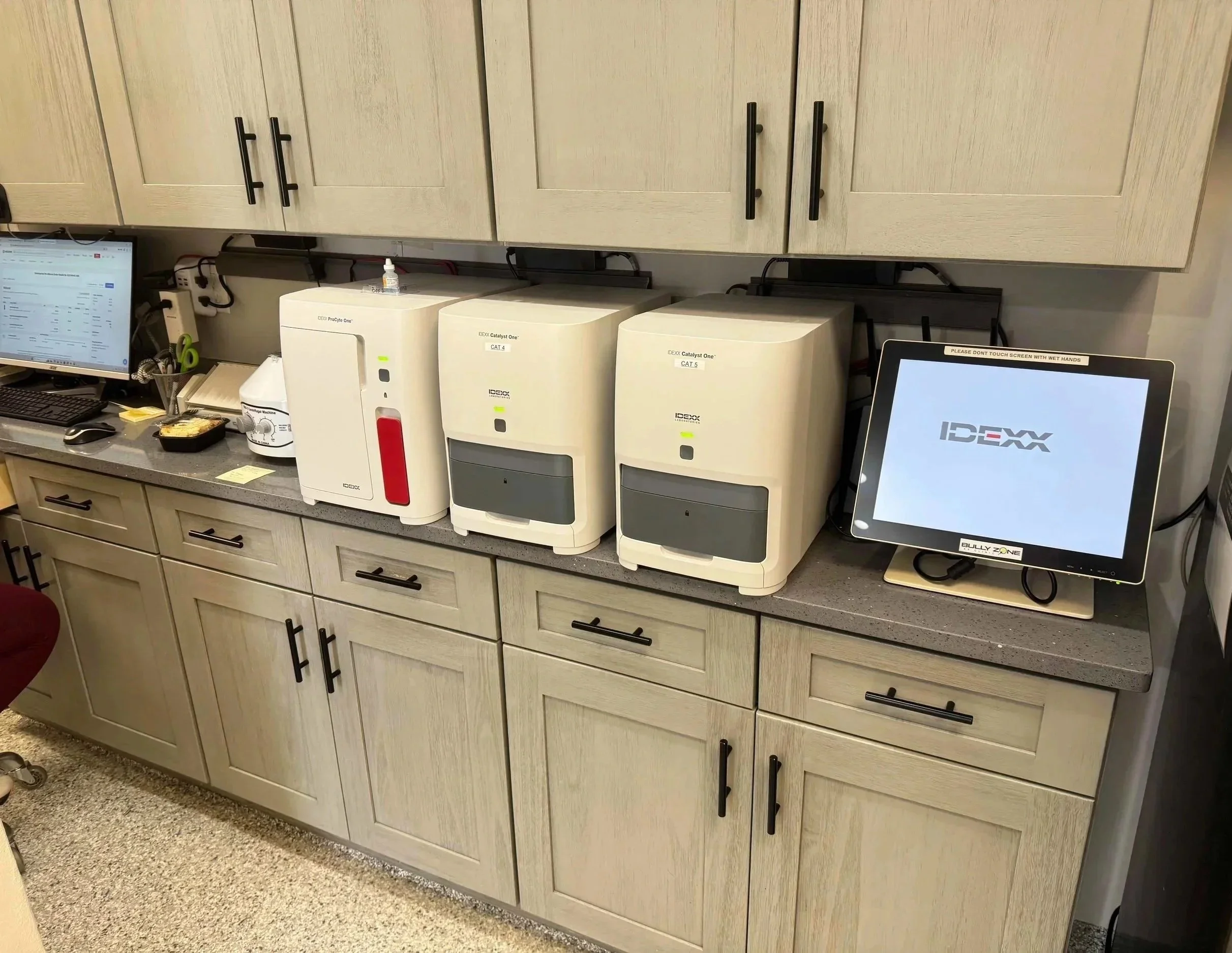
Anti-inflammatory medication safety starts before the first dose. Tell our team about every prescription, supplement, flea and tick product, heartworm prevention product, topical medication, over-the-counter item, and recent injection your pet has received. Two medications that seem unrelated at home can matter when our veterinarians are evaluating side-effect risk.
Some anti-inflammatory medications can affect the stomach, intestines, kidneys, or liver. Side effects can include vomiting, diarrhea, poor appetite, black or bloody stool, decreased activity, yellowing of the eyes or gums, increased thirst, increased urination, weakness, or behavior changes. If your pet develops concerning signs while taking medication, stop giving the medication and call a veterinarian unless our team has given you different emergency instructions.
Do not combine anti-inflammatory medications with steroids or another anti-inflammatory medication unless our veterinarians specifically direct you to do so. Medication combinations can increase the risk of stomach or intestinal problems, kidney concerns, and other side effects.
Longer-term medication plans need follow-up. Dogs taking anti-inflammatory medication for ongoing joint pain or mobility concerns may need baseline and repeat pet bloodwork to check kidney and liver values. Cats need especially conservative planning because long-term anti-inflammatory options are limited and require careful veterinary judgment.
What to Expect During Your Pet’s Medication Evaluation in Newark, NJ
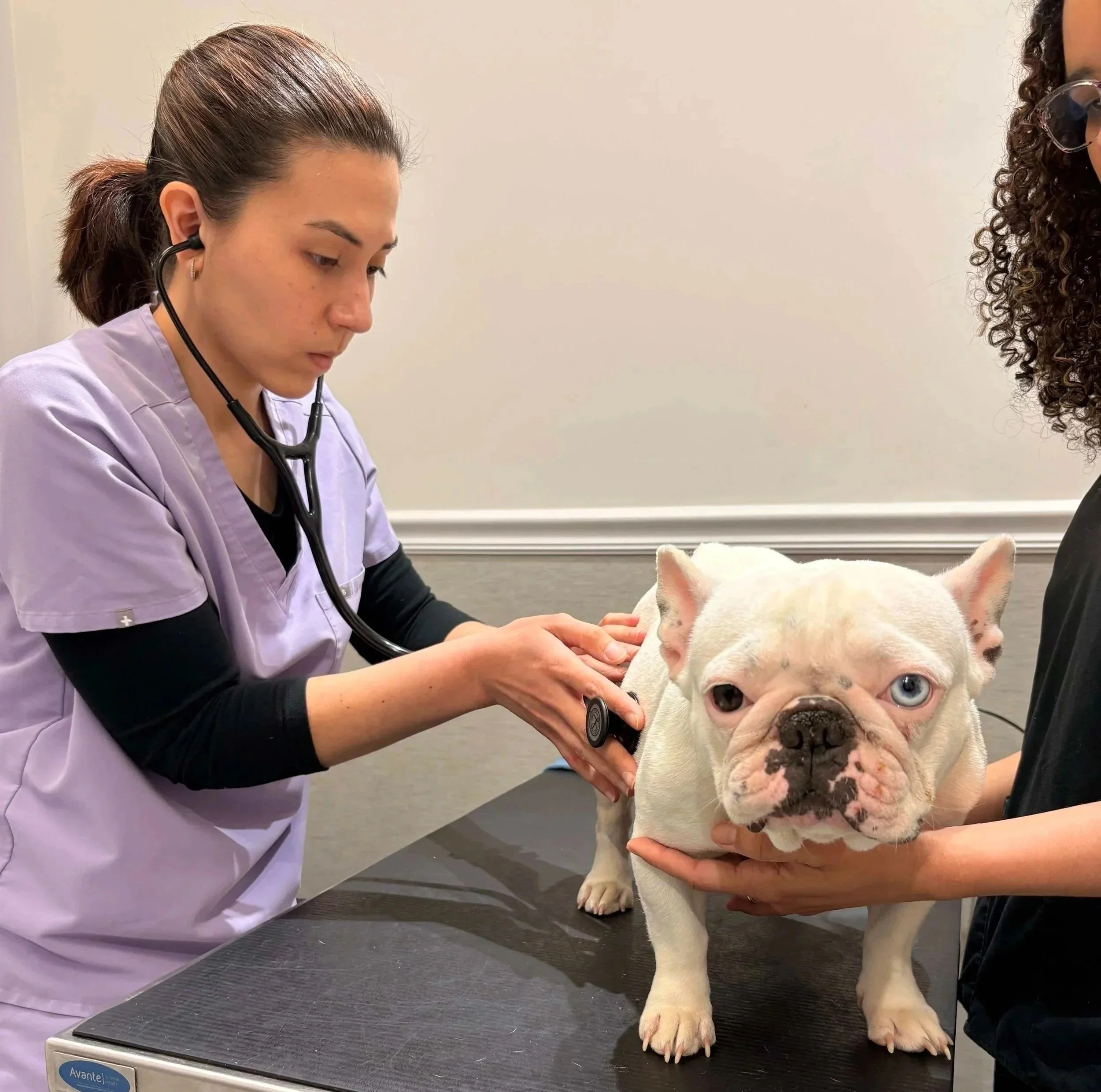
Your pet's visit usually begins with a physical exam and a conversation about what you are seeing at home. When did the pain, swelling, stiffness, redness, or behavior change start? Is it getting better or worse? Did your pet fall, play hard, have surgery, start a new medication, or develop vomiting, diarrhea, appetite loss, coughing, urinary signs, or lethargy?
Will your pet always leave with anti-inflammatory medication? Not necessarily. Sometimes the safest answer is a different medication, diagnostics, rest, wound care, allergy treatment, dental treatment, surgery-related follow-up care, or close monitoring. Our job is to match treatment to your pet's actual condition, not to prescribe anti-inflammatory medication for every sore pet.
Depending on your pet's symptoms, our veterinarians may recommend:
A mobility, orthopedic, skin, ear, mouth, wound, or post-procedure exam
Weight check and medication-history review
Pet bloodwork or lab testing when medication safety or internal illness is a concern
Dental care evaluation when oral pain or inflammation is suspected
Skin or ear testing when inflammation may be allergy- or infection-related
Rest, activity restriction, bandaging, topical treatment, pain control, or supportive care
Referral or emergency care if the problem needs advanced treatment
If medication is prescribed, we will review how much to give, how often to give it, whether it should be given with food, how long to continue it, what side effects to watch for, and when your pet needs a recheck. If your pet has trouble taking medication at home, call us before skipping doses, doubling doses, or changing the plan.
Refills, Rechecks, and Ongoing Pain or Inflammation
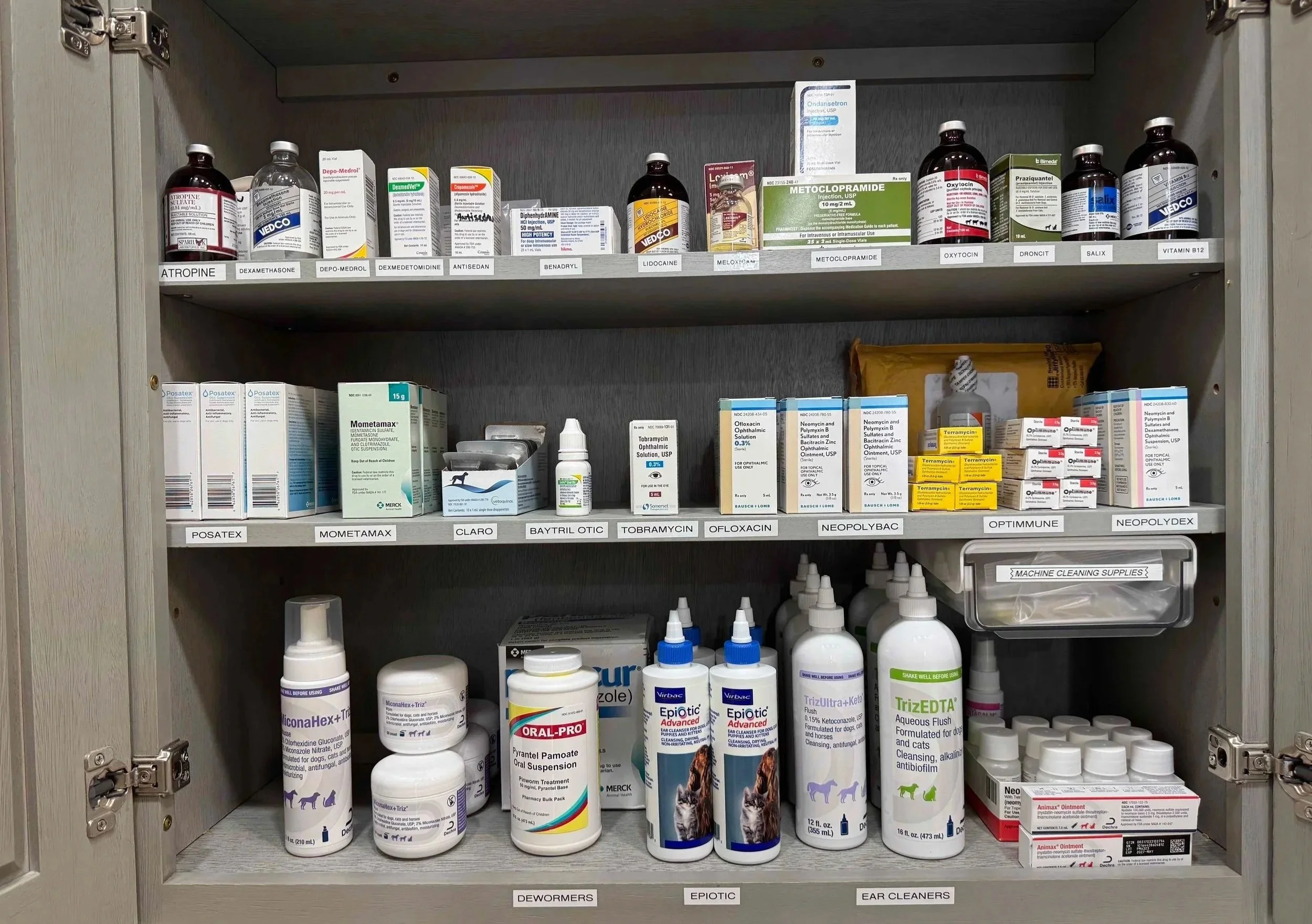
Need more anti-inflammatory medication because your pet still seems sore? A refill may not be the safest next step without a recheck. If pain returns, swelling persists, or mobility worsens, our veterinarians may need to confirm whether the original problem is still present or whether something new has developed.
Some medication plans can be continued when your pet is current on exams and recommended monitoring. Other refill requests require an updated visit, weight check, pet bloodwork, lab testing, or a change in treatment. This is especially important for senior dogs, cats, pets with kidney or liver concerns, pets with digestive problems, and pets taking more than one medication.
If another veterinarian, emergency hospital, shelter, rescue, or online pharmacy provided the original medication, please send records before the refill request when possible. Medication name, dose, start date, diagnosis, lab results, response, and side effects help our Newark veterinary team decide whether continuing, changing, or stopping medication is safest.
Please do not wait until the final dose to ask for a refill. Refill timing can be affected by medical review, monitoring needs, appointment availability, pharmacy coordination, and whether your pet's symptoms have changed. If you are commuting through Newark Penn Station, working near Prudential Center or NJPAC, or driving from Harrison, East Newark, Kearny, Belleville, East Orange, North Arlington, or Bloomfield, a little lead time helps prevent rushed decisions.
The Veterinarian Pet Alliance is located at 1415 McCarter Highway in Newark, along the Passaic River corridor and close to Route 21. Our animal hospital is convenient for pet owners from Downtown Newark, the Ironbound, the East Ward, University Heights, the North Ward, Central Ward, South Ward, West Ward, Forest Hill, Vailsburg, Weequahic, Clinton Hill, Springfield/Belmont, and neighborhoods near Branch Brook Park, Military Park, Lincoln Park, Independence Park, Riverfront Park, and Weequahic Park.
Pet Anti-Inflammatory Medications Near Ironbound, Harrison, Kearny, and Belleville
Are you coming from Harrison, East Newark, Kearny, North Arlington, Belleville, Bloomfield, East Orange, Irvington, Elizabeth, Hillside, Union, Lyndhurst, Secaucus, Jersey City, South Orange, Maplewood, or another nearby North Jersey community? If you are searching for pet anti-inflammatory medications, dog anti-inflammatory medications, cat anti-inflammatory medications, or veterinary pharmacy and prescription refills near Newark, our team can help you understand whether your pet needs an exam, medication, monitoring, or a different care plan.
Our location is also practical for pet owners traveling near Newark Penn Station, Red Bull Arena, Rutgers-Newark, NJIT, University Hospital, NJPAC, the Prudential Center, Newark Museum of Art, Port Newark, Newark Liberty International Airport, Route 1&9, I-78, I-280, and the New Jersey Turnpike. When your pet is painful, stiff, swollen, or not acting like themselves, local access helps you avoid guessing with unsafe medication at home.
Whether your dog is limping after a park walk, your cat is moving less around the apartment, or your pet needs post-procedure medication review, contact our Newark veterinary team. We will help you decide whether anti-inflammatory medication belongs in the plan and what follow-up your pet needs next.
Why Choose Veterinarian Pet Alliance for Anti-Inflammatory Medication in Newark, NJ?
Pain and inflammation can be frustrating because you can see your pet struggling, but you may not know what is safe to give. Should you wait? Should your pet be seen today? Is the old medication still okay? Is this arthritis, injury, infection, dental pain, or something else?
Pet owners choose our Newark veterinary team for:
Pet anti-inflammatory medications for dogs and cats when medically appropriate
Dog anti-inflammatory medications planned around diagnosis, size, health history, and monitoring needs
Cat anti-inflammatory medications handled with careful feline-specific safety judgment
Coordination with sick pet visits, pet bloodwork, lab testing, dental care, pet allergy and skin care, veterinary surgery and soft tissue surgery, spay and neuter surgery, and mass removal and wound repair
Clear instructions for safe medication use at home
Practical recheck and refill guidance for pets with ongoing pain or inflammation
A local Newark animal hospital serving Ironbound, Downtown Newark, the Passaic River corridor, and nearby North Jersey communities
At the Veterinarian Pet Alliance, our veterinarians take anti-inflammatory medication decisions seriously. We look at your pet's symptoms, exam findings, species, age, weight, medication history, organ health, side-effect risk, diagnosis, and response to treatment before recommending medication or approving a refill.
If your dog or cat may need anti-inflammatory medication, schedule a visit with our veterinary team. We will help you understand what is causing the discomfort, what medication is safe, and what care your pet needs next.
Frequently Asked Questions About Pet Anti-Inflammatory Medications
-
No. Do not give your dog or cat aspirin, ibuprofen, naproxen, acetaminophen, or any human pain reliever unless a veterinarian specifically directs you to do so. Human medications can be dangerous for pets, and cats are especially sensitive to many pain and anti-inflammatory drugs.
-
In most cases, yes. Our veterinarians need to examine your pet, understand what is causing the pain or inflammation, review health history and current medications, and decide whether anti-inflammatory medication is safe and appropriate.
-
Signs that may lead to an anti-inflammatory medication discussion include limping, stiffness, trouble rising, joint pain, soft tissue swelling, post-procedure discomfort, dental pain, or painful skin and ear inflammation. These signs can have different causes, so a veterinary exam is the best place to start.
-
Yes. Cats process many medications differently than dogs and people. Some medications used for dogs are not appropriate for cats, and cat anti-inflammatory medication plans require careful veterinary guidance, dosing, and monitoring.
-
Call a veterinarian if your pet develops vomiting, diarrhea, poor appetite, black or bloody stool, decreased activity, yellowing of the eyes or gums, increased thirst, increased urination, weakness, behavior changes, or symptoms that seem worse after starting medication.
-
Do not combine anti-inflammatory medication with steroids or another anti-inflammatory medication unless our veterinarians specifically instruct you to do so. Some combinations can increase the risk of stomach, intestinal, kidney, or liver side effects.
-
Sometimes. Pet bloodwork or lab testing may be recommended before or during treatment, especially for senior dogs, dogs needing longer-term medication, dogs with kidney or liver concerns, dogs with digestive issues, or dogs taking other medications.
-
Sometimes. Refills depend on your pet's current exam status, diagnosis, medication history, response to treatment, monitoring needs, and whether symptoms have changed. A recheck or updated testing may be needed before a refill can be approved.
-
Contact our veterinary team. Your pet may need a recheck, different medication, diagnostics, rest plan, dental care, wound care, allergy treatment, referral, or emergency care depending on the symptoms. Do not increase the dose unless our veterinarians tell you to.
-
Yes. The Veterinarian Pet Alliance provides pet anti-inflammatory medication evaluation in Newark, NJ, for dogs and cats when medication is medically appropriate. We serve pet owners from Ironbound, Downtown Newark, East Ward, University Heights, Forest Hill, Weequahic, Vailsburg, Harrison, Kearny, Belleville, Bloomfield, East Orange, North Arlington, and nearby North Jersey communities.